Skip Navigation

InitialsDiceBearhttps://github.com/dicebear/dicebearhttps://creativecommons.org/publicdomain/zero/1.0/„Initials” (https://github.com/dicebear/dicebear) by „DiceBear”, licensed under „CC0 1.0” (https://creativecommons.org/publicdomain/zero/1.0/)F
Posts
5
Comments
59
Joined
12 mo. ago

  • Never forget.

  • After four fall-offs, the process usually comes to a halt on its own?

  • The immediate impact of the "iran war" is not simply in fossil energy, but also on a huge range of fossil fuel byproducts on which AI and many other industries depend. The global economy is still very much a fossil fuel economy, and AI is locking us even further into it.

    I was thinking about how if there is any silver lining to the conflict, its that it deobfuscates some of the complex links in modern supply chains and it also makes salient how even some of the techno-optimist environmental and technical solutions are all underpinned by non-renewing energy and material resources...

  • Wine consultant Leon Deans said distillation could be a viable option to remove the oversupply, but may require government support because the cost of distilling the wine could be higher than the revenue from the ethanol.

    If you consider that:

    • cost of distilling bakes in the thermodynamic and energy costs of raising the temperatures of the wine to separate the alcohol
    • the price for the pure alcohol is fungible with the market price of any other liquid fuel or alcohol on a per-energy equivalence

    This seems like it's a net energy negative process where the total amount of energy available to the society drops where you do this. This is exactly why it loses money.

    Basically:

    • you buy some energy some place
    • wine producers take product they already made that has no market value and use the energy input to make something they can sell, using up that original energy
    • the energy coming out is lower than what you started with in step 1, but you sell the energy for less money
    • this loses energy AND money, but the government subsidies make the money side not a problem

    This cuts wine makers in on the deal in a way where the market makes this feasible despite the underlying thermodynamic losses.

    NOTE: the grapes and wine that were originally grown, the harvesting, bottling etc also have thermodynamic and material costs that are totally external to this analysis. The farm itself bought fuel when it made the wine, that's all not ibcluddd into the ethanol calculus. When you consider the total investment with a wider boundary you can start to cost many additional resources like time, water, wages, insurance, financial interest and on and on.

    • Comaps for driving / street navigation
    • Caltopo for backcountry navigation (has offline maps)
    • Trailforks for public recreation trails (hiking, mountain travel, mountain bike)
    • Relief Maps for 3D landscape visualization / viewing
  • He called Trump the anti-Christ and evil.

  • This comes from a recent interview you can listen to here or read here.

    The absolutely most interesting thing from this interview is not the hash smoking detail.

    The part that is more important is that Carlson states early on in the interview that he feels that the American president was being blackmailed by Israel into engaging in the Iran war. Carlson basically comes out and implies that the president is compromised and manipulated and knows it, and he had no choice. He doesn't specifically speculate on how they are controlling Trump. But he says that he's shocked at the media failure to investigate this. Its really worth listening to this section of the interview. He met Trump 3X and deeply discussed Iran in the weeks before the fighting.

    The only thing that comes immediately to mind is that Israel has the Epstein files and are threatening to release them. But it could be something else of course.

  • The "largest rocket" also peaked in the 1970s and is now getting smaller. . Rocket fuel is basically made of kerosene.

    Fun fact. Notice that on rockets designed to get farther out into space that the actual capsule is tiny and the rocket is essentially an enormous fuel tank needed to carry all the fuel you need to carry all the fuel you need?

    So the fun fact is that if planet earth was 1.5 diameters larger, gravity would be stronger. If gravity was just that much stronger, humanity would still be unable to get to space. Right now, we discovered oil, which had just barely enough energy per mass to allow a launch to orbit. But if gravity was a little more, we would not have any technology that could do it. This tells a story about the limits of human ingenuity. We were just lucky to discover the resources ready to go, we did not invent the resources.

  • A friend of mine was a social worker in senior leadership for a national hotline that was a resource for youth who were struggling with problems.

    Over the years, the nature of the calls shifted away from typical teenage problems around parents, friends, school, dating etc.

    The number 1 call coming from the teens was about a sense that there was no future and that older generations were engaging in gaslighting youth about how things are still ok.

    For my friend, this posed a major dilemma because it became increasingly difficult to obtain the essential operating fund donations. How do you ask for funding from older generations who had a strong desire to avoid hearing that message?

  • collapse @lemmy.zip

    The International Monetary Fund (IMF) warned the US-Israel war with Iran could plunge the global economy into recession
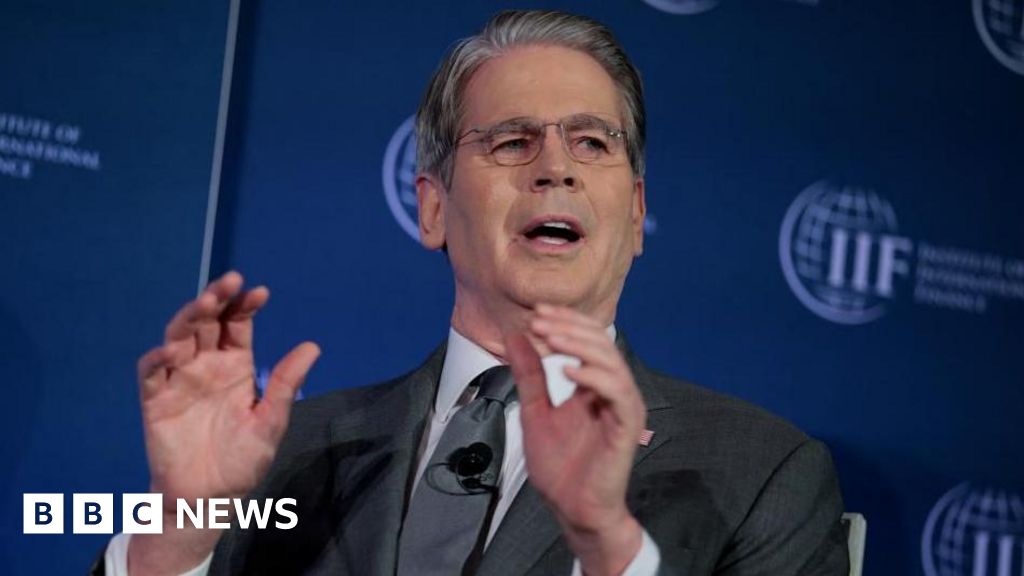
    www.bbc.com /news/articles/c4g66p2q075o
  • collapse @lemmy.zip

    HSBC warns oil chaos threatens $47B in energy loans

    themeridianews.com /news/hsbc-warns-oil-chaos-threatens-47b-in-energy-loans
  • If shit properly hits the fan, I suspect things are going to be way more desperate.

    To be a little more precise, people have studied this question carefully at a planetary scale.

    The total agricultural production possible in the absense of artificial inputs like fertilizers, pesticides, diesel tractors, cold storage and refrigerated supply chains etc is around no more than 3billion people running off solar inputs and natures nutrient cycles and the amount of land and water available.

    Pretty shocking number if you don't have the context, but here is a place to get started on the information this is based on.

    So for example, in the green revolution, land and agriculture technology increased a modest amount, but artificial fossil inputs into the existing technology system increased 90-fold. Most of the gains in food production are because it's now based on fossil energy and nutrients rather than natural sources.

    Currently, today ~40% of all the human food supply molecules come from fossil fuels and are incorporated into the plants and animals we eat.

    So it's not "just" a land management issue, or urbanization. Humanity is literally on artificial life support. There is no simple, survivable way out of this commitment. Fundamentally this is far, far from penciling out any other way we know how to survive. Humanity population passed some threshold for change around 3-4 generations ago.

  • https://lemmy.zip/c/collapse

    In the collapse community people have been aware of a "thermodynamic" collapse of energy supplies for quite a while.

    So for example, to mainstream people and the investors, there is something called 'oil' which seems like a commodity item.

    In the collapse community, worldwide supplies of diesel and heavy oil energy products (shipping, trucking, agriculture, mining and gasoline refining among many other applications) has been in a 10-year long period of decline with major implications for our global civilization.

    (Diesel / heavy crude comes from several places globally. The USA has run out but Venezuela and Iran are two heavy hitters for the molecules needed.)

    The blockade on the strait is only having any impact because it's a zero sum game now that nobody can raise production any higher. Like you don't see Norway and Canada suddenly ramping up and filling demand, right?

    I consider this the most parsimonious and cogent world view.

    In a short summary: the blockade is an artificial shortage that is designed to collapse and bankrupt the most dependent and vulnerable nations in the global periphery, which is a "triage" that preserves oil supplies for the wealthy nations in the long run. Like this triggers collapse, and then as a second order effect global demand will fall for energy which is in an irreversible depletion event. This is the only way the most developed nations extend their existence through the crash.

    This is all an open secret, you can dig into technical papers and agency reports and academic publications, everything will say the same thing. However, this is not really a "mainstream" consciousness.

  • Climate Crisis, Biosphere & Societal Collapse @sopuli.xyz

    The 2026 Southwest U.S. heat wave was one of the six most astonishing weather events of the century » Yale Climate Connections

    yaleclimateconnections.org /2026/04/the-2026-southwest-u-s-heat-wave-was-one-of-the-six-most-astonishing-weather-events-of-the-century/
  • Not The Onion @lemmy.world

    Everest guides accused of poisoning foreign climbers to force fake rescues

    www.independent.co.uk /travel/news-and-advice/everest-climbers-sherpas-fake-rescue-scam-poisoning-b2950597.html
  • THIS is why we need green energy, fossil fuel infrastructure is far too brittle.

    There is actually a report that does a deep dive into some of these details:

    https://www.iea.org/reports/energy-technology-perspectives-2024

    Warning, this is a svelte 400-page report!

    I was mentioning this because of the content of Chapter 5 & 6.

    In summary, in Chapter 5 the case is made that the global supply chains for the renewables economy require an order of magnitude more shipping because most of the resources are very material intensive. For example, we will need much more dry bulk ocean freighters to transport ore, metals, coal and so on.

    In Chapter 6 on the strategic considerations, it turns out that multiple new shipping lane chokepoints will be created, many of them in socially unstable and dangerous areas. In some of these areas huge ships will be passing through 100s of times a day. The location of these chokepoints shifts dramatically from the fossil fuel paradigm.

    The report concludes that the "just in time" fossil fuel markets are more susceptible to short term disturbances, but the post-carbon economy will be vastly more reliant on massive massive transport supply chains with lots of lower density materials. Where already installed energy systems are not disturbed in the short term, the supply chain will be exponentially more vulnerable to shocks and there are much larger attack surfaces.

    The report analyses 10 marine shipping chokepoints starting at page 385. In the charts that follow, you can see how a lot of petro shipping passes through one or more chokepoints, but the cleantech will have 3X more chance of the shipping supply chain passing through chokepoints. Solar, EVs, batteries and heat pumps are the tech that is particularly vulnerable to passing through these chokepoints.

    Whenever a shipping lane is disrupted, ships have to take longer journeys to bypass the issues, and longer voyage times has the same effect as reducing the total amount of ships available globally. It also raises costs and creates domino effects in supply chains.

    In summary, the cleantech economy is a massive increase in supply chain complexity. I really don't think most people understand how much low density material will need to be moved around the globe in the future. Cleantech is a much more intense global industrial supply chain.

  • That's because the whole theory is wrong.

    The renewables/EVs are being made in factories that are a long term investment in coal powered manufacturing. They are being shipped in oil powered ships and driven by diesel trucks on asphalt roads and mounted on concrete foundations or whatever.

    The entire supply chain is the exact same supply chain that was designed in the fossil fuel era.

    The renewable energy system is less than 3% of the whole thing and the system isn't being redesigned.

    Unfortunately, what we were doing was always childish and superficial.

  • ... what I am saying is replay Fallout New Vegas, Hardcore mode, just in case.

    I just ordered a case of Nuka-Cola.

  • Lazy. Weak argument.

  • No, I didn't make it up.

    Most people haven't ever thought about this or checked their assumptions and biases. And I say that because you're assuming I made it up but YOU don't actually have the figures. Very interesting.

    You want the citation or can you look it up all on your own?

    I'll give you a hint. Its very hard to find any citation that will compare defense to science in a direct way.

    What you can easily do is find a number for the science spending as a percentage of GDP, and a number that gives you the defense budget with identical terms.

    Once you check you are welcome to report back if you disagree.

    So this will really require two citations and some critical thinking

    [ * elsewhere I commented that we spend more on science in the USA than rhe transportation sector. Feel free to check that also, but again, you can't read this anywhere except by asking the questions yourself.]

  • With all due respect, do you know that more money is spent on Science than the entire defense budget?

    Like I take your point, but also it's more complicated. I'd argue that zero science can be done without policing the worlds shipping lanes and supply chains. There is possibly a lot of waste corruption and destruction in the defense budget BUT...

    Further down the comments in this very discussion someone starts talking about how Einstein and the theory of relativity began the development that causes the GPS grid.

    I could advance an argument that ALL the current high technology is a product of public defense spending and not science funding. Like virtually all the technology inside the modern cell phone originated as defense spending that was then given over free of charge to large corporations to make consumer products and privatize the profits. (Touch screens computers, radio, satellites, GPS, the internet etc are from military).

    Like, it's not as pure an example as I think you're hoping to make. There absolutely is a clear high return on investment on part of defense spending. A lot of pure science doesn't create this kind of result.

    I think it's proof that we are civilizationally pretty broken that this could happen, but also it's nice to look at it realistically and consider what this means about us.

  • When people first start looking for gold, they find giant nuggets just sitting there.

    Then they use pans, horses and pickaxes to find chunks of gold in rivera and seams in the rock.

    Then they build huge floating factories to dredge up entire landscapes and sift for tiny flecks of gold sand.

    THEN they gather a massive amount of human slaves to gather host rock and process it with cyanide to leach the gold out of massive amounts of overburden.

    At some point whatever new gold is left to go get takes the wealth you already have and lowers it. You will spend more gold mining than you will pull out of the ground. Nobody is saying you can't go mine new gold today. It's that it has a negative return on investment. This is beyond the inflection point. Many many things could go into the calculus for what it costs... Your technology, your price of energy, the degree of automation, etc. You might be able to play with your accounting for a long time and find corners of the planet that are favorable...

    But to go mine for something that isn't there and isn't producing a return make you poor now. In reality / realistic terms this is now different.

    So then you end up asking yourself: "what is this gold even for?" And that's like looking into the abyss because our culture doesn't have a collective meaning to organize society if this goes away.

    Ok, so that's an analogy. Science used to work, and everything is screaming that we are close to the end now.

    Like every government, every company, all our organizations, they all depend on this facade continuing... And so the end of science is extremely damaging to the story we tell ourselves.

    If that story were to go away we would have to ask some big questions

  • collapse @lemmy.zip

    Exclusive: Australian Government refuses to release "terrifying' climate security report to the public

    www.thesaturdaypaper.com.au /news/politics/2025/09/20/exclusive-government-refuses-release-climate-security-report