
Skip Navigation

Posts
21
Comments
1684
Joined
3 yr. ago

  • I think most of us understand economics well enough to see that there's no difference between a selective discount and a selective price hike.

  • Sure, but many languages do that,

    I wrote several paragraphs and talked about three languages, so I'm going to have to guess about what "that" refers to. I'm guessing it's Lisp macros. Your other comment offers template metaprogramming in C++ as an alternative.

    Template metaprogramming Gets maybe a third of the way to what Lisp macros offer. It can do compile-time syntax transformations, but it doesn't provide the full C++ language with which to do so, doesn't operate on the actual parse tree, and isn't Turing-complete in practice because of fixed limits on recursion depth in real compilers. Rust macros get much closer, providing the full power of Rust and the option to get at a real AST by parsing the token stream they operate on.

    If you mean something else, please elaborate. It's an interesting topic.

    There are more modern and better ways, IMO.

    I'm not sure what "more modern" means in this context. If it just means young, I can probably find a Lisp family language with its first release this year, though that wouldn't be the one I would recommend to a beginner. If it means recently-updated, Racket, the Lisp I recommended learning had its latest stable release nine days ago. If it means something else, please say so.

    "Better" probably can't be measured objectively, but by all means, make the case for something else.

  • Some people want to learn programming to get a job, though perhaps not as many in 2026. Some people want to do a project that happens to requiring programming. Some actually want to understand programming and get good at it. The last group will benefit from learning Lisp and Haskell even if they don't end up using those languages much. I thought my first comment explained why and I think Corngood elaborated on it, but I'll add more.

    The reason to use programming languages instead of machine/assembly languages is that they add abstractions, and allow the programmer to add more abstractions. An abstraction is a name and implementation for a repeated pattern in code, which documents the programmer's intent when it is used, allows all invocations to be modified in one place, and substantially shortens programs. In most languages, there's a distinction between abstractions the language designer can add and those the programmer can; in Lisp, there is not.

    If most languages didn't have if or class, you couldn't add them in a library; you'd have to modify the interpreter or compiler. Here's if defined in a Lisp-like language I'm working on:

     
            (defmacro if (test then else)
          `(cond ~test ~then true ~else))


    This is possible because Lisp code is made of Lisp data structures which it can easily manipulate, and because it has the ability to control when evaluation occurs. Here, we need to splice three blocks of code into a cond expression, which is a more generalized form of conditional evaluation that takes an unlimited number of test/then pairs. We must also prevent the premature evaluation of the branch not chosen, which is why if and cond can't be regular functions. In Common Lisp, the entire object system can be implemented as a library.

    Haskell and similar languages also offer significant power for abstraction with its sophisticated type system and lazy evaluation, but the more important lesson they can teach is the gurantees they can make at compile time. Once a Haskell program compiles, it has a much greater chance to work as expected than any other language I've used.

    SQL teaches thinking in data. Most programs exist to store and manipulate data, so that's pretty relevant.

  • Converting two of the lanes into one-way frontage roads seems like it would improve things a lot in that particular case.

  • The last photo in the article shows the real culprit. The road has six lanes and looks like a highway, which encourages people to drive at highway speeds. Then there are a bunch of businesses and side streets, which mean many vehicles enter and exit the road, and pedestrians cross it, which is bad on a road with people driving at highway speeds.

    They hoped to solve the problem with signs asking people to drive slower. Speed enforcement might help a little, but it's a patch over a bad design.

  • I question the suggestion that Zig and Go are not "serious" programming languages. They certainly weren't designed to be "easy" beginner languages.

    I don't think it matters a whole lot which language you start with. Learning to program is largely separate from learning a particular language, and if you do programming for a while, you'll probably learn several. I do think someone who wants to understand programming deeply should learn each of:

    • A lisp, probably Racket, but others will do. This teaches a lot about how computation works, and is at least a local maximum for abstractive power.
    • C, an assembly language, or something similar where the developer must manage memory manually and has the ability to mismanage it. This teaches how computers work.
    • A statically typed functional language, probably Haskell. This makes programming more math-like and probably represents a local maximum for what can be proven about a program's behavior without solving the halting problem.
    • SQL. I wish there was something prettier with a modicum of popularity that does what it does (PRQL is my favorite recent attempt), but there isn't. This teaches thinking about data in sets and relations, and you will almost certainly use it in practice.
  • The policy is mandated for "certified" Android devices. Those have Google apps preloaded and pass Google's remote attestation.

    GrapheneOS is not certified and has no plans to be.

  • Given that new cars are very expensive, and you don't want new-car features, you might be better off putting significant money into maintaining your old car.

    People usually only do that with collectable cars they expect to increase in value or enthusiast cars they drive for fun, but you can spend quite a bit on maintenance before it's as expensive as new-car depreciation.

  • I'm not sure I'd describe it as "bad vibes", but Detroit has always struck me as charmingly postapocalyptic. It's the only place I've ever seen fires in barrels in the middle of streets in real life.

  • Yeah, I talked about how assets are different than things we need, like health…

    The original comment references luxury assets like supercars. In the USA, the average adult needs a car of some sort to function in society, and often cannot afford the unplanned purchase of a reliable used car (let's call that $15K). Collision insurance that will cover most of the cost of a replacement car is a reasonable value for many people, and the insurance company doesn't have any special leverage like access to massive discounts on replacement cars (they may have access to modest discounts on repair services, but nothing like what health insurance has).

    You just don’t understand it

    I think I made it pretty clear I understand that for-profit health insurance is a scam because providers overcharge anyone who doesn't have it to an extreme degree. That's not the case for pretty much anything else.

  • For-profit insurance for most things isn't a scam. Insuring against the destruction of a house or car, for example is a calculated tradeoff; on average, you lose money (expected value is negative), but only a little at a time. In exchange, you get a guarantee that you won't lose an asset you can't afford to replace.

    For-profit health insurance in the USA is a special sort of scam because they negotiate prices that aren't available to the public, often an order of magnitude lower.

  • If someone was going to reward me for burning a lot of tokens, I'd feed LLM output into the LLM input until they ran out of rewards.

  • I am surprised. I've run both KDE and Gnome on a Surface Go 2 (8100Y), which is either slower or barely faster depending on which CPU you have, and I've had no UI lag.

  • My solution in the same situation is to use Gnome. I strongly prefer KDE on a desktop/laptop, but Gnome is an outstanding tablet UI and KDE isn't... except that Gnome's onscreen keyboard is crap.

  • Using it as a laptop? In theory, a 10" screen thin and light laptop with the guts in the base instead of the screen is a better design. There aren't very many of those to be had, especially not for $90 on Ebay.

    Watching videos during taxi, takeoff, and landing? The alternative is paying attention to the safety briefing. I think I won't.

  • Surface Go 2.

    It wasn't a Linux tablet when it first arrived, but that was easy to fix.

  • Most models are just PCs. The cameras in my Surface Go 2 don't work out of the box on Linux, but everything else is fine.

  • The power supplies for those things showed up dirt cheap on Ebay at a time when 2A+ USB power supplies were premium items. I bought a bunch of them.

  • As the owner of a proper Linux tablet, tablets are for combining with keyboards for use as small laptops.

    They're also good for watching videos during taxi, takeoff, and landing during which laptop use is forbidden.

  • Buildapc @lemmy.world

    LG 32G810SA-W.AEU for 400€ for photo editing and productivity, or something else?

  • Technology @lemmy.world

    a16z-Backed Startup Sells Thousands of ‘Synthetic Influencers’ to Manipulate Social Media as a Service
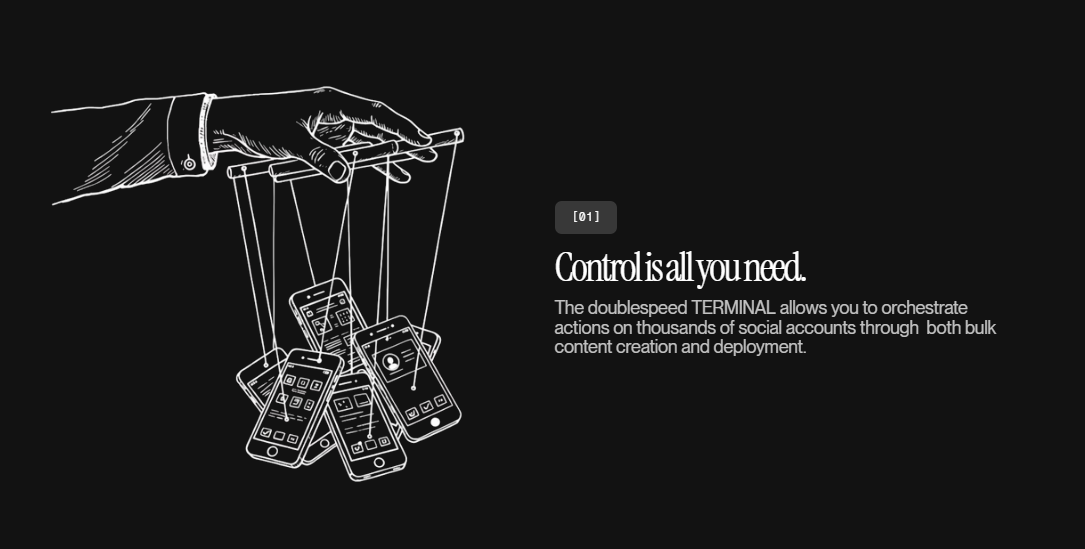
    www.404media.co /a16z-backed-startup-sells-thousands-of-synthetic-influencers-to-manipulate-social-media-as-a-service/
  • Linux @lemmy.ml

    Rant: I hate the Gnome onscreen keyboard

  • Linux @lemmy.world

    Surface Go 2, or something else?

  • politics @lemmy.world

    TSA ends shoes-off policy for US airport security screening

    www.reuters.com /world/us/tsa-set-let-airport-travelers-keep-their-shoes-media-reports-say-2025-07-08/
  • News @lemmy.world

    TSA ends shoes-off policy for US airport security screening

    www.reuters.com /world/us/tsa-set-let-airport-travelers-keep-their-shoes-media-reports-say-2025-07-08/
  • Privacy @lemmy.world

    Recommend a VPN with residential exit IPs

  • Technology @lemmy.world

    Right to Root Access

    medhir.com /blog/right-to-root-access
  • Fediverse @lemmy.world

    Is it currently possible to completely self-host ATProto and interact with BlueSky users?

  • Everyday Carry. What essentials do you carry on a daily basis? @sopuli.xyz

    Election day carry

  • Everyday Carry. What essentials do you carry on a daily basis? @sopuli.xyz

    EDC just came up in another community, so it's time for a pocket dump

  • Selfhosted @lemmy.world

    Recommend a server-side email classifier

  • Lemmy.world Support @lemmy.world

    Please stop blocking VPNs for established accounts

  • Ask Lemmy @lemmy.world

    What RSS readers should I recommend to others?

  • Everyday Carry. What essentials do you carry on a daily basis? @sopuli.xyz

    Today's knife and light

  • Selfhosted @lemmy.world

    Webpack hashing problems after Mastodon server update

  • pics @lemmy.world

    Can I eat lens hoods?

  • You Should Know @lemmy.world

    YSK: Your phone camera's aspect ratio is 4:3; setting it to anything else crops your photos

  • Photography @lemmy.world

    I took a picture of a stork

  • Photography @lemmy.world

    A curious little blue heron