Skip Navigation

  • I mean, national weapons proliferation? That’s really not a concern with modern reactor tech, and they should know that. The article ignores the last 50 years of advancement in reactor design to present their arguments, and that really undermines their credibility.

    The problem is: In real life, most nations want weapons potential as an added bonus to their expensive civil nuclear programs. This connects to the "Takes too long to build" and "Expensive" points.

    Nuclear waste is also something, that even though ideas exist in spades, no one seems to have been able to solve. So I wonder: What are the real world hurdles, that have prevented all the talk of "we just need breeder reactors" or something similar, that I have been hearing for many years now, to manifest? Is the tech maybe not as easily implemented as thought? Is the cost/reward ratio too bad, so it would again connect to the expensive point?

    Thing is: I am not fundamentally against Nuclear as part of a power mix, with climate change being the most pressing reality. But I think it's often presented as better as it is in the real world by people that are highly intelligent and knowledgeable in the basic physics and theoretical engineering parts - but then usually don't have answers for why, then, even states that don't have large anti-nuclear movements don't use it often, in real world circumstances.

  • Nothing to lose but your chains, you say 🤔

  • I think you might be onto something there, still remains in favour of individual capitalists against national capital - and is usually something, the state is supposed to prevent (it's jobs in capitalism are mostly preventing class conflict between bourgeoisie and proletariat just as much as conflict between individual capitalists hurting the economy at large).

    But this now feels like 19th century economics from before understanding the nature of crises, and 19th century "sphere of influence" geopolitics all in one.

    Here's hoping they end up shooting themselves in the foot by underestimating the consequences of their actions.

  • The Nixon-era Richardson Waiver came about amid a push for more public engagement, with the waiver acting essentially as a workaround to amending the APA's exemptions. As Richard Brady, the assistant secretary for administration, wrote in the Federal Register at the time, implementing the Richardson Waiver "should result in greater participation by the public in the formulation of this Department's rules and regulations."

    "The public benefit from such participation should outweigh any administrative inconvenience or delay which may result from use of the APA procedures in the five exempt categories," Brady wrote. The waiver also noted that the Health Department should use the "good cause" exception "sparingly."

    Kennedy's new policy rescinds the Richardson Waiver entirely. He writes in stark contrast: "The extra-statutory obligations of the Richardson Waiver impose costs on the Department and the public, are contrary to the efficient operation of the Department, and impede the Department's flexibility to adapt quickly to legal and policy mandates."

    So, just to make this clear, they didn't just not really implement their fabled transparency, they also walked back on the control mechanisms that were already in place.

  • Debian operating system @lemmy.ml

    How to install Debian Testing... and why you might not want to

    peertube.wtf /w/vfvH2FhaXuVYwiUv4R1pYv
  • Firefox @lemmy.ml

    The Manufactured Crashout of Mozilla

    peertube.wtf /w/cmPVgYXXz2ghHJZqY8G6KU
  • It's fascinating, because the people behind him are genuine grifters and/or delusional ideologues, he can't even make proper politics in the interest of capitalists. (Just in the interests of some individual capitalists, against the interests of national capital accumulation).

  • Fediverse @lemmy.world

    How To Migrate A Mastodon Account From One Server To Another

    peertube.wtf /w/oivkezB5ANaZrxgQDUQBwb
  • All us former or present weebs that once learned Hiragana, Katakana, maybe 5 words and phrases, and basically nothing else, understand. (And the people actually speaking Japanese, too)

  • It really isn't, but as long as those resources are distributed through a market, there are problems even if you add money. Say the billionaires truly are incorruptible angels and put all their money to providing food and shelter, the not-yet-billionaires in the market suddenly have incentives to raise prices, withhold food to the market while prices are rising as a speculative gambit, stuff like that.

    That's one of the mechanisms through which the system itself, that produces billionaires, makes it at least hard or - imo - even impossible to truly undo the damage it does to create such billionaires, even when you have those billions. Another example is corruption: As soon as you put a lot of money into an issue, it creates an incentive there to funnel money away in secret, to provide false solutions that don't solve anything, to scam, etc. A friend of mine worked on projects providing water infrastructure in countries in Africa from philanthropic and international aid funds, and he did get often frustrated telling how some projects simply vanish halfway through, because someone down the line had basically run off with the money (not that the projects were wholly useless, either, but they failed to fundamentally solve things by just throwing money at them). Someone like Bill Gates, as another example, has been unironically doing a lot of good as a philanthropist, but all his money still wasn't able to truly tackle the root causes of the problems in the countries where he supports healthcare and such things - and inevitably, some of the funds he provided were used on glamour projects or ineffectual, nice-sounding strategies, or ended up in outright corruption. And at the same time, the question remains, what the system that made him a billionaire caused in damages to begin with.

    That's why I still think you can't really tackle all these problems without doing away with a market structure, exchange value, capital accumulation, etc. - i.e., why I remain a dirty commie, instead of just arguing for redistribution (redistribution and more social-democratic, beneficial investment is still good, but you gotta always aim for the abolition of private property and capital accumulation as an end goal, imo).

    Oh, and I just realised my ramble kind of missed OP's point, which is also important: All the money caught up in the three-digit multi-billionaires net worth? It's not representative of true goods and labour, it is what Marx would have called "dead" capital. As soon as it is used for anything but as financial capital, it can drive inflation massively, which connects to part of my first point.

    EDIT: Another example that just came to my mind for how this can impact things - Mansa Musa and the stories surrounding his lavish spending during his Hajj, basically crashing the local economies. So, even pre-capitalist systems had to deal with these dynamics.

  • This is an interesting conundrum, actually. The big question at its core being:

    Can you ever do enough good through philanthropy, so that it offsets the damage you had to do, in order to become a billionaire? Can even all the billionaires in the world do enough good with their money, to offset the damage done by a system, that allowed for them to become billionaires?

    I, personally, don't think it is possible.

    To give an actual answer: I think, the world would definitely be better, but unless those billionaires collectively used all the power their money provides, to do away with money and the possibility of billionaires altogether, I don't think it would amount to all that much.

  • Perfect moment to plug !Peertube@lemmy.world

    Growing steadily, and in my opinion, definitely a way to supplement (still far from replace) YT. There's actually some neat content on there by now, from just good to fascinatingly bizarre - but almost always very genuine and authentic. Especially when comparing to some years back, it really has become a proper seed for a platform instead of a novel experiment - but more people interacting with the content and/or supporting the creators would be amazing as the next step.

  • RISC-V @lemmy.ml

    RISC-V and Open Hardware | Fedora Podcast 47

    peertube.wtf /w/dC1787oWA7dChiTCav1qBJ
  • Oh, neat, I remember borrowing money from friends to buy one shortly after release, and spending many months repaying it. My main thought process, besides it being a cool PC, was "the higher the statistics, the better the outlook for Linux adoption". :D

    Can barely believe it's been three years already.

  • Something good keeps getting better, thank you all for your work!

  • Oh, thanks for the info, that is great to know!

  • As far as I know, from when this was discussed after the first Reddit exodus, only commenting and posting makes you an active user. So the number is somewhat deceivingly small, as the vast majority on platforms like this are lurkers who maybe post/comment every once in a while at most.

  • Videos @lemmy.world

    How TIKHistory misleads you with sources

  • This is the way, after all, Lemmy has lots of great mobile apps.

  • Videos @lemmy.world

    When to distrust scholarly journals

  • Enshittification @lemmy.world

    Reddit thread about some subreddits becoming paywalled this year

    old.reddit.com /r/technology/comments/1ipe74t/reddit_plans_to_lock_some_content_behind_a/
  • Nah, everything's fine, face is melting like always.

  • PeerTube @lemmy.wtf

    PeerTube Companion – Get this Extension for 🦊 Firefox (en-US)

    addons.mozilla.org /en-US/firefox/addon/peertube-companion/
  • PeerTube @lemmy.wtf

    [SUPPORT] I've noticed none of my videos are discoverable via the (global) search function - what could be the issue?

  • PeerTube @lemmy.wtf

    Whoops, I think the server may have crashed

  • Fediverse @lemmy.world

    The Fediverse is Quiet — Let's Fix That!

    peertube.wtf /w/xwCSYfZh1mJY64zJ9GngbE
  • My guess is that what they were going for was: The person in the foreground was supposed to be distressed completely independently of Superman's actions, and the way he undresses was supposed to signify, that the situation is so dramatic, Superman is even willing to immediately switch into costume, jeopardising his secret identity.

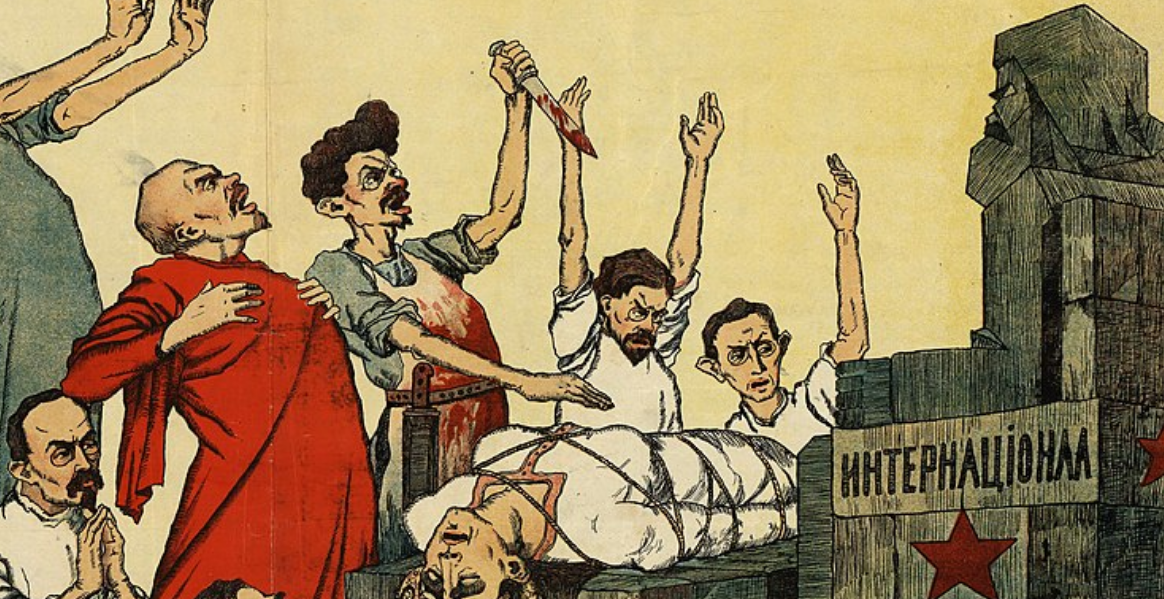
  • Pretty sure they were inspired by how Trotzki looked.

  • Out of Context Comics @lemmy.world

    W-what are we going to do on the bed, Superman? 😳

  • Out of Context Comics @lemmy.world

    Yeah, what about it?

  • Out of Context Comics @lemmy.world

    Superman mutates into Super-Landlord

  • Videos @lemmy.ml

    ZAUM The Inside Story: Part 1

  • Out of Context Comics @lemmy.world

    Lois Lane, forcefully put on Uranus to please Superman

  • Out of Context Comics @lemmy.world

    What kind of sleeve are we talking about here?

  • Out of Context Comics @lemmy.world

    Based Superman?