Skip Navigation
  • Yeah, I get that. I think that this camera + lens combination would meet your criteria while giving you pretty decent quality and the ability to upgrade. It is what I have recommended in the past to people asking this same question and they have been very happy with it. You can pass the idea through Grok, I think it will agree ;)

  • Instead of a "compact camera", I'd recommend getting a used Lumix DMC-GX80 + the 20 mm pancake prime lens. If you don't like primes and prefer to zoom, you can get a compact zoom lens instead.

    Some people really don't like buying used camera equipment... but I have had only positive experiences so far.

  • I like the idea of PeerTube, but I tried running an instance and was unable to sustain the experiment for too long. I made it very open and it got quickly flooded by pirated TV series and spammy and heavy content.

    After that, I had a difficult time at some point finding an instance to host some videos I wanted to upload - and, having had that failed experiment before hand, I can see why the instances that do survive are often those with more stringent filters and less generous with resources.

    So, I am sorry to "chime in about the shortcomings", but hosting a PeerTube instance can be a demotivating experience. You set up the infrastructure expecting to contribute to a space reminiscent of the old youtube, and you see it filled with spam. The signal-to-noise ratio is just awful and it is expensive. To avoid this, you can be an aggressive gate keeper - but this makes the platform less friendly to people who are looking to find a space to share their original content. Gate keeping is also an additional effort that you need to make. In the end I chose to just shut it off as it was more of a hassle than fun. By comparison, hosting a Lemmy instance is fun, much much cheaper, and little hassle.

    I still haven't given up on the idea of Peertube, though... I have some video ideas, and when I finally get to making them I plan to make another instance to host only my channel. Then, I would be able to host my own channel using my own infrastructure via a federated network. This use case would work very well for me, and it can probably work for many others. So that is one way of building the Peertube network.

    General permissive video uploads is something that makes YouTube such a powerful platform though, and that is very difficult to replicate.

  • EDIT: After reading through the Git issue and the other comments in this thread, it is not very clear to me what "combining comments from cross-posts on the post screen" means. I understood it at first to mean that you will pool all comments together and show all of them in all cross-posts, but now I am not so sure. Still, in general terms, I think that mechanisms to share activity with niche communities are good

    I would say yes, there are cases in which I have thought that this would be a nice thing to have. Especially when cross-posting to a smaller niche community.

    I can think of a few potential small issues. For example, cross-posters can edit the body of the message, so you might in some cases end up with comments that seem out of place as they refer to the content specific to a cross-post. You also have the rare case in which the same post might mean different things in different communities.

    But, overall, I see it as beneficial. Quirks can be fine-tuned later on.

  • Ok! I'll update you then 😄

  • Fair point - I completely forgot to take the 3D geometry into account. I guess this could be solved by either making both sp³ (sub the Si-O with Si-Cl) or both sp² (sub the H-O-Si with H-N=Si)? But then writing data becomes more complicated than just adding or removing hydrogens that, as you said, isn’t as simple as it looks like.

    I think that the solution that life came up with - making a flexible double helix-forming backbone from which base pairs hang is actually a pretty good way of going about it. Similar as with proteins - a standard flexible backbone with different groups hanging off the chain and influencing how it folds. In your proposition you have the silicon backbone and a single atom as the 'side chain', so there is no separation between the backbone and the pairing elements to add this flexibility.

    There are also some other details to consider. For example, the amount of data you can store in a given chain length changes depending on how many different types of chemistry you have. In your example, you are using only one type of 'base' because the only options are 'hydrogen bond donor' or 'hydrogen bond acceptor'. If you have a chain length of 3, you get only 3 bits, which can store one of 23 = 8 values from 0 to 7 (000 to 111). With DNA, you have 4 different base pairs, so a chain length of three can encode 43 = 64 values.

    That means that, to get a good information density, you would also want to increase the number of possibilities. The challenge here is that you need to tune the set of possibilities so that the thermodynamics are balanced. You don't want some pairs to stick very strongly while others stick only loosely, and you also don't want certain bases to be able to pair with each other. See: https://en.wikipedia.org/wiki/Nucleic_acid_thermodynamics

    You can perhaps dispense with some of the thermodynamic tuning if you don't need to be able to easily replicate the data through a process similar to DNA replication, as you don't actually need to 'pair' at all - you have a single string of data. But in that case you lose a very powerful method as you are forced to re-synthesize every data chain from scratch - I think that with such a system you lose too many benefits.

    If you go through the steps of creating a system of molecular data storage from scratch, I think it is easy to converge towards something similar to DNA. A lot of 'origin of life' research is actually about this - thinking about these systems and how to engineer them from scratch, and... DNA is pretty good at this. When you consider that early chemical evolution was an optimization algorithm to solve this problem, it makes sense that DNA is a good choice.

    I do think it is good and fun to explore this. We do have at least some advantages over nature - for example, we have managed to purify many compounds that were not abundant in early chemical soups. So, perhaps we can find something.

    Like the dNaM / dTPT3 pair, right? That’s perhaps more viable, at least to increase information density.

    Yeah, like those. In this recent paper, for example, researchers sequenced a chain of four anthrophogenic base pairs that they refer to as 'ALIEN bases': https://www.nature.com/articles/s41467-025-61991-9

  • Hmm, you are right, it is possible that the initial activation is more difficult if you are not in NL.

    I found a forum post of someome having problems with a KPN sim card, but for LycaMobile I still don't know: https://community.kpn.com/prepaid-16/sim-card-activation-doesn-t-work-in-germany-591780

    I wil be going to Germany in a few days so I will bring one of those SIM cards and check what happens when I try to activate it, I'll report back.

  • The R2S=O case is closer to a trigonal planar geometry, the other silicon is tetrahedral. The silicon-silicon distances for different pairs of adjacent molecule types will be different. In a very very rough forcefield optimization I see about 3% difference. I don't think this one will work out structurally because the chains will become unable to pair after a short length as the chain will not have the flexibility to create the O--H bond without adding too much strain.

    But, that's just one thing. You then need to consider how to actually selectively place/remove the hydrogen atoms, how to avoid the molecule from chemically reacting, and how to read out the data.

    So, yes, eventually it would be nice to have a fully orthogonal system. There are already several synthetic DNA base pairs that can be used instead of the naturally present bases. But these would still be susceptible to DNAses or RNAses.

    The way I see it is that the chemistry of living things is currently centuries ahead of human tech. A large portion of the techniques used in biochemistry rely on using living things to produce the components, and then we purify those components and use them. It makes a lot of sense to make use of that toolkit because the amount of challenges that need to be solved to create this system from scratch is massive.

    Your proposal of your silicon chain reminds of the Ferroelectric RAM, where the state is encoded by the polarity of a cell that is changed by moving a zirconium or titanium cation:

    This does work, but it works because the crystal is contained within a semiconductor scaffold, and this is something that we do have a good handle on.

  • Very cool!

  • Lemmy, but very rarely

  • I looked up LycaMobile in Germany and was surprised to find you have an entire 'Prepaid SIM' wiki, ha! https://www.prepaid-wiki.de/tarife/Lyca_Mobile

    Germany is not too far from NL. I think you can just order a Dutch SIM card. If all you want is for it to be active, I don't think it would be a problem as you would not actually use roaming services. Just top up via code every 5.5 months or so by dialing 101CODE#

    I have not tested this myself so there may be some special rules I am not aware of, but I have often kept phone numbers abroad for years - just not Germany specifically

  • Once again, thanks a lot for your hard work!

    Good thing that not all my posts will show up as edited now 😄 And community-specific search is very handy!

  • Yeah, as others mentioned, you can get cheaper data plans depending on the monthly data you need.

    However, one of the interesting properties is that, unlike with phones, there is no restriction on the number of pagers that can listen to your assigned RIC. You can use one subscription to communicate with as many pagers as you would like, and each individual pager can be programmed using text filters such that one can implement their own sub-address system.

  • Oops, thanks 😀

  • I suspect so too. I contribute to the local network with a few nodes :) In a controlled, coordinated setting it works well, but continuous reliability and coverage are still challenging.

  • Woah! A new term for biology textbooks. Xenopary. That's really really cool! Thanks for sharing.

  • Thank you for reading! Happy you find it valuable.

  • I think that the Dutch make some good/interesting infrastructure choices.

  • Asklemmy @lemmy.ml

    Have you experienced ASMR?

  • Exercise and Sports Science @mander.xyz

    Less gym time, same results: Why 'lowering' weights is all you need to do

    www.sciencedaily.com /releases/2022/11/221103105002.htm
  • Pine64 @lemmy.ml

    Current status of the PinePhone distros

  • Science @mander.xyz

    Human brain cells implanted in rats prompt excitement — and concern
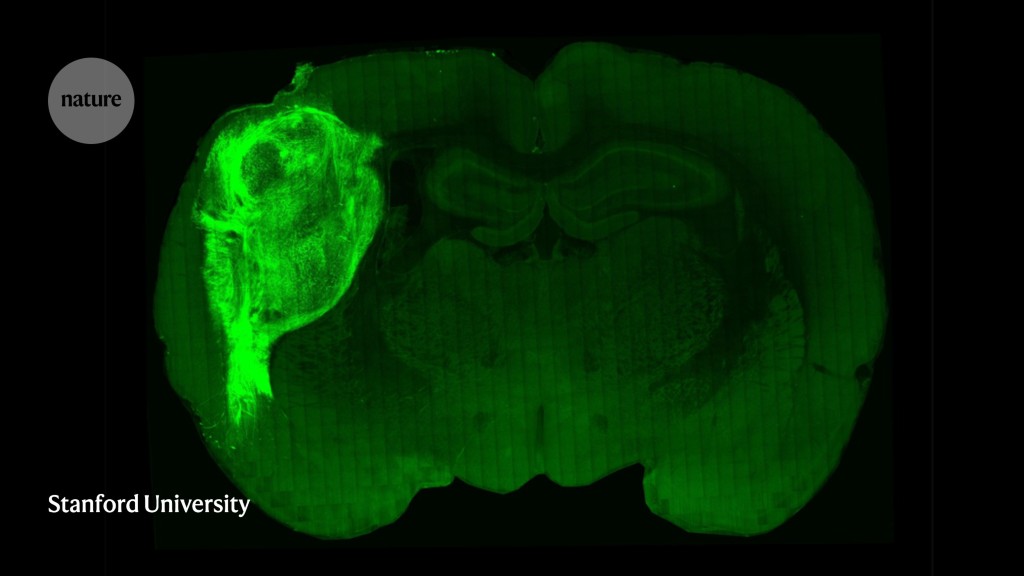
    www.nature.com /articles/d41586-022-03238-x
  • Science @mander.xyz

    In vitro neurons learn and exhibit sentience when embodied in a simulated game-world
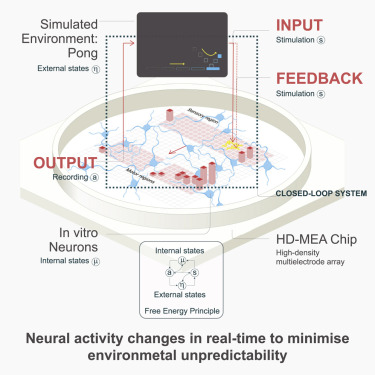
    www.cell.com /neuron/fulltext/S0896-6273(22)00806-6
  • How To @lemmy.ml

    Camera Motion Trigger with PIR Sensor and Opto-Isolator

  • Self Hosted - Self-hosting your services. @lemmy.ml

    How have you optimized your Pi-hole?

  • How To @lemmy.ml

    How to make a paperback book by hand

  • Music @lemmy.ml

    Car alarm music

  • Memes @lemmy.ml

    Please

  • Vegan @lemmy.ml

    Dutch city becomes world’s first to ban meat adverts in public

    www.theguardian.com /world/2022/sep/06/haarlem-netherlands-bans-meat-adverts-public-spaces-climate-crisis
  • Physics @mander.xyz

    The best semiconductor of them all?

    www.sciencedaily.com /releases/2022/07/220721141459.htm
  • The Deep Sea @mander.xyz

    The Vampire Squid, a Living Fossil of the Abyss

  • Physics @mander.xyz

    Physicists Trace the Rise in Entropy to Quantum Information | Quanta Magazine

    www.quantamagazine.org /physicists-trace-the-rise-in-entropy-to-quantum-information-20220526/
  • Biology @mander.xyz

    Structure of ATP synthase under strain during catalysis - Nature Communications

    www.nature.com /articles/s41467-022-29893-2
  • Plants @mander.xyz

    plants outside vs. plants inside

  • Biology @mander.xyz

    Why photosynthetic organisms evolved to have dimeric reaction centres

    www.chemistryworld.com /news/why-photosynthetic-organisms-evolved-to-have-dimeric-reaction-centres/3010954.article
  • Biology @mander.xyz

    In Test Tubes, RNA Molecules Evolve Into a Tiny Ecosystem

    www.quantamagazine.org /in-test-tubes-rna-molecules-evolve-into-a-tiny-ecosystem-20220505/
  • Asklemmy @lemmy.ml

    Have you had success correcting your bad posture?

  • Science @mander.xyz

    Study conspiracy theories with compassion
    www.nature.com /articles/d41586-022-00879-w